


Can Office Cleaning Happen After Hours? Yes.

The last employee has logged off, the meeting rooms are empty, and tomorrow’s workday is already waiting. This is exactly why can office cleaning happen after hours is a common question for office managers and business owners. The answer is yes. For many workplaces, evening or weekend cleaning is the most practical way to maintain a clean, professional environment without interrupting staff, customers, or daily operations.
After-hours cleaning gives your team the benefit of arriving at a refreshed workplace each morning, while trained cleaners have the time and access needed to complete the job properly. It is not the right setup for every business, but with clear scheduling and security procedures, it can be one of the most convenient options available.
Why after-hours office cleaning works
Cleaning during business hours can be disruptive. Vacuum noise interrupts calls, wet floors create hazards, and cleaners moving between desks can make employees feel as though they need to work around the service. In busy offices, reception areas and restrooms may also need to stay open for visitors throughout the day.
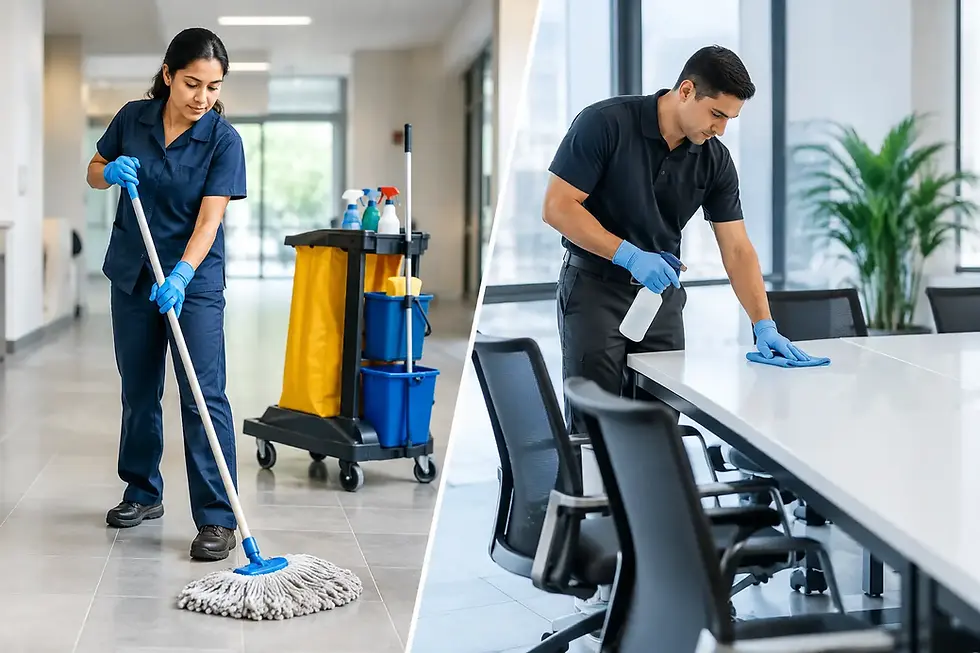
After-hours service avoids most of these issues. Cleaners can vacuum workstations, sanitize high-touch surfaces, remove trash, clean restrooms, mop floors, and tidy shared spaces when rooms are empty. The result is a more thorough clean with less interruption.
For offices with client meetings, early shifts, or staff working across different schedules, this timing can also protect the professional appearance of the space. Your team does not have to explain why cleaning is taking place during a presentation or ask visitors to step around equipment in the hallway.
There is a practical cost consideration, too. Evening service may require arrangements for access, building rules, parking, or security. However, many businesses find that the reduced disruption and better cleaning access make it worthwhile. The best choice depends on your office hours, building requirements, and the level of cleaning required.
Can office cleaning happen after hours safely?
Yes, provided the cleaning arrangement is planned with security in mind. Handing keys or access codes to any service provider without a process creates unnecessary risk. A professional cleaning company should be comfortable working within your building’s access rules and documenting the instructions that matter.
Before an after-hours service begins, confirm who will provide entry, whether cleaners need to sign in with building security, and which areas are included in the service. Some offices provide a controlled access card or arrange for a building representative to let the team in. Others use a lockbox or a pre-approved entry code. The right method depends on your site, but it should be agreed upon in advance rather than handled casually on the day.
It also helps to identify restricted areas. Finance files, server rooms, executive offices, storage cabinets, and sensitive records may require limited access or specific instructions. A reliable provider will respect these boundaries and clean the approved areas without guesswork.
Clear communication is equally valuable when an office has alarms. Let the cleaning team know whether an alarm must be disarmed, who to contact if there is an access problem, and what to do if an emergency occurs. Simple instructions prevent delays and help protect your property.
What can be cleaned in the evening?
Most routine office cleaning tasks are well suited to after-hours service. This includes dusting desks and common surfaces, emptying waste bins, vacuuming carpets, mopping hard floors, sanitizing restrooms, cleaning pantry areas, and wiping touchpoints such as door handles, switches, and shared equipment.
Evening cleaning is especially useful for tasks that need time to dry or should not be performed around employees. Carpet cleaning, floor treatment, detailed restroom work, window washing in accessible areas, and deep cleaning can often be scheduled after closing or over the weekend. By morning, floors are dry, furniture is back in place, and staff can return to work normally.
The scope should match how your office is used. A small professional office may only need regular upkeep two or three times a week. A larger workplace with high visitor traffic, food preparation areas, or many shared desks may need daily attention. There is no benefit in paying for a generic package that does not reflect the actual condition of your space.
Set expectations before the first clean
A smooth after-hours service starts with a clear walkthrough or discussion. This is the time to point out priority areas, explain your preferred cleaning days, and identify any spaces that need special care. For example, a reception area may need extra attention before client appointments, while a pantry may require more frequent cleaning than private offices.
Be specific about desk policies as well. Some companies prefer cleaners to wipe only clear surfaces and avoid moving personal paperwork. Others authorize light tidying of workstations. Neither approach is wrong, but the instruction should be clear. This protects confidential documents and avoids misunderstandings.
Your cleaner should also know where supplies are kept if your office provides its own materials, where trash should be disposed of, and whether recyclables need to be separated. If the provider brings supplies and equipment, confirm this before booking so there are no surprises.
For ongoing service, establish one main contact person. If your office will be closed for a public holiday, hosting an event, or changing its opening hours, that person can notify the cleaning company promptly. A responsive provider should confirm schedule changes through a clear channel such as phone, SMS, or email.
When daytime cleaning may be better
After-hours cleaning is convenient, but it is not always the best fit. A business that operates late into the evening, runs around the clock, or has staff on rotating shifts may need daytime cleaning in quieter windows instead. Medical settings, retail spaces, and customer-facing businesses may also need cleaners present during the day to handle spills, restock restrooms, or maintain an immediate standard of appearance.
Some offices choose a mixed approach. A cleaner may handle quick restroom checks and trash removal during business hours, then complete vacuuming, mopping, and detailed sanitation after employees leave. This can work well for busy spaces where appearance matters all day and deeper cleaning cannot interfere with operations.
The key is to choose a schedule that supports your business instead of forcing your business to work around cleaning. A good cleaning plan should feel organized, predictable, and easy to manage.
Choosing an after-hours office cleaning provider
Trust matters more when cleaning takes place after your team has left. Look for a company that communicates clearly, sends trained professional cleaners, and is willing to understand your site requirements before service begins. Price matters, but the lowest quote is not always the best value if it leaves you chasing updates or dealing with inconsistent results.
Ask how the company handles access instructions, schedule changes, quality concerns, and special requests. You should know what is included in each visit and how to raise an issue if something needs attention. A satisfaction guarantee is most useful when it is backed by a responsive team that actually follows up.
Shine White Cleaning provides flexible office cleaning schedules for businesses that need dependable service outside normal working hours. Whether you need routine evening cleaning, a weekend deep clean, or a one-time refresh before an important event, the service should be planned around your workplace rather than the other way around.
A clean office should never create a disruption of its own. Set clear access rules, agree on the right cleaning scope, and choose a team you can trust after the lights are off. Then your employees can walk into a cleaner, more comfortable workspace and focus on the work ahead.


Comments